
It’s the kind of thing that sounds like an urban legend: the idea that your body knows when it’s about to die, and your nose is the first to figure it out. But science—and spirituality—might be whispering something deeper.
For centuries, shamans, hospice nurses, and spiritual healers have reported an unexplainable shift when someone is close to death. A stillness in the air. A heaviness in the room. Sometimes, even a strange smell. Now, researchers suggest this may not be imagination—it may be chemical reality.
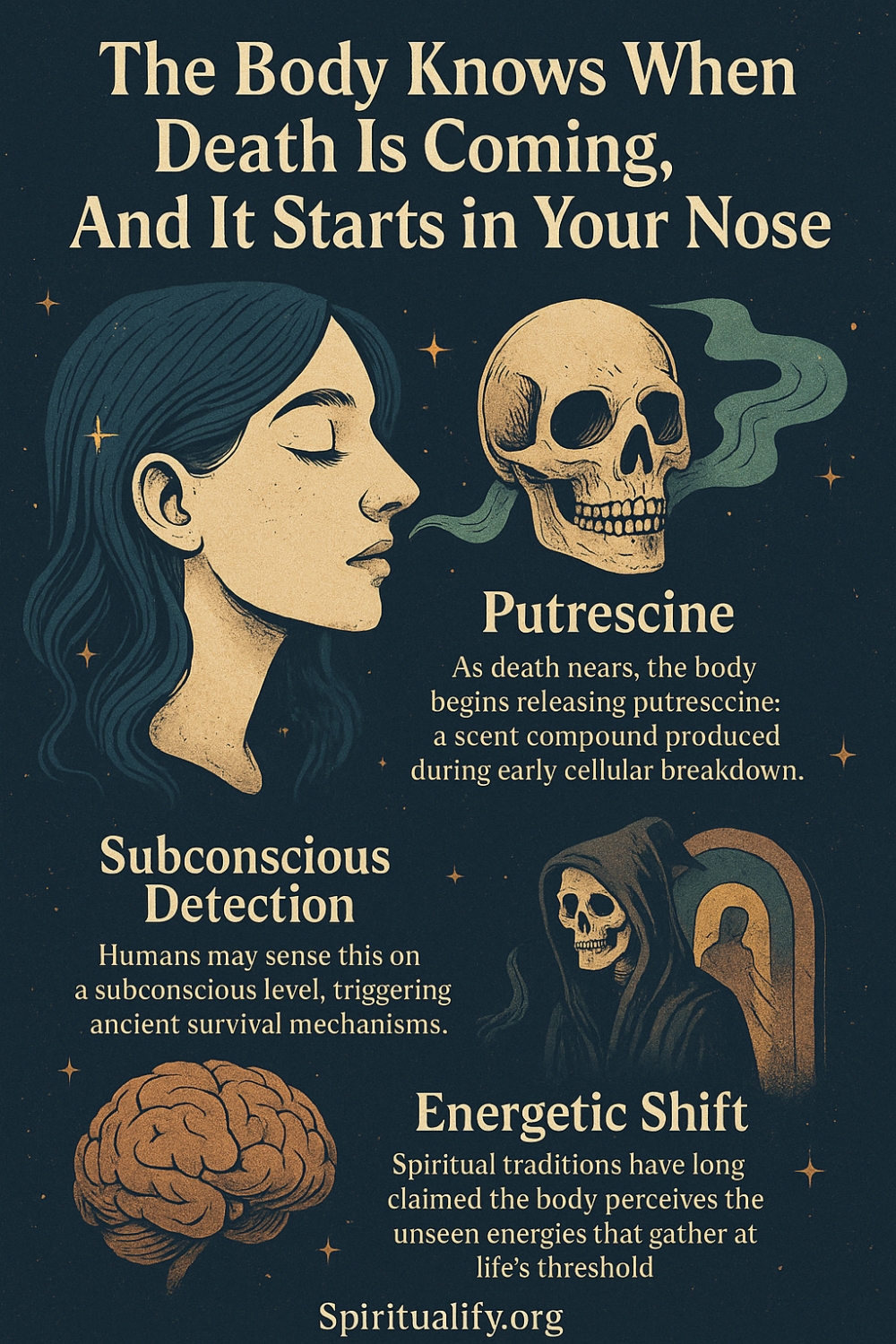
As the body begins to shut down, it emits a distinct scent, triggered by compounds released in the early stages of cellular decay. One such compound is putrescine, a chemical also found in decomposing meat. It doesn’t register consciously for most of us, but studies show it activates a subconscious fight-or-flight response, almost as if our ancient DNA is warning us: Death is near.
It’s eerie. It’s fascinating. And it reaffirms what many spiritual traditions have claimed all along: the body and soul always know more than we think.
The Olfactory System: A Forgotten Sixth Sense

Our sense of smell is older than our words, older than fire. It was our first sensory compass, guiding our ancestors toward food, away from predators, and toward safe kin. While modern society often dismisses scent as secondary to sight or sound, your nose is still a silent guardian, constantly scanning the air for danger—even if you’re unaware.
The olfactory system is uniquely wired to the limbic system, the part of your brain responsible for emotion, memory, and survival instincts. That's why smells evoke vivid memories—far more intensely than sounds or images.
Consider this: You smell fresh rain, and suddenly you're five years old again, barefoot in a puddle. Now apply that same principle to death. What if, without consciously recognizing it, you can smell the energy of departure?
“The nose is a gateway to memory, emotion, and ancient survival.” – Valerie Ann Worwood, The Fragrant Mind
Dr. Arnaud Wisman from the University of Kent suggests this ancient mechanism still serves us, particularly through the detection of putrescine. As someone nears death, their body chemistry subtly shifts, releasing signals that our subconscious may perceive as a call to attention—or even a warning.
In other words, while your mind might be distracted by hospital lights or funeral arrangements, your nose is already preparing your soul for goodbye.
Putrescine: The Chemical Harbinger of Death
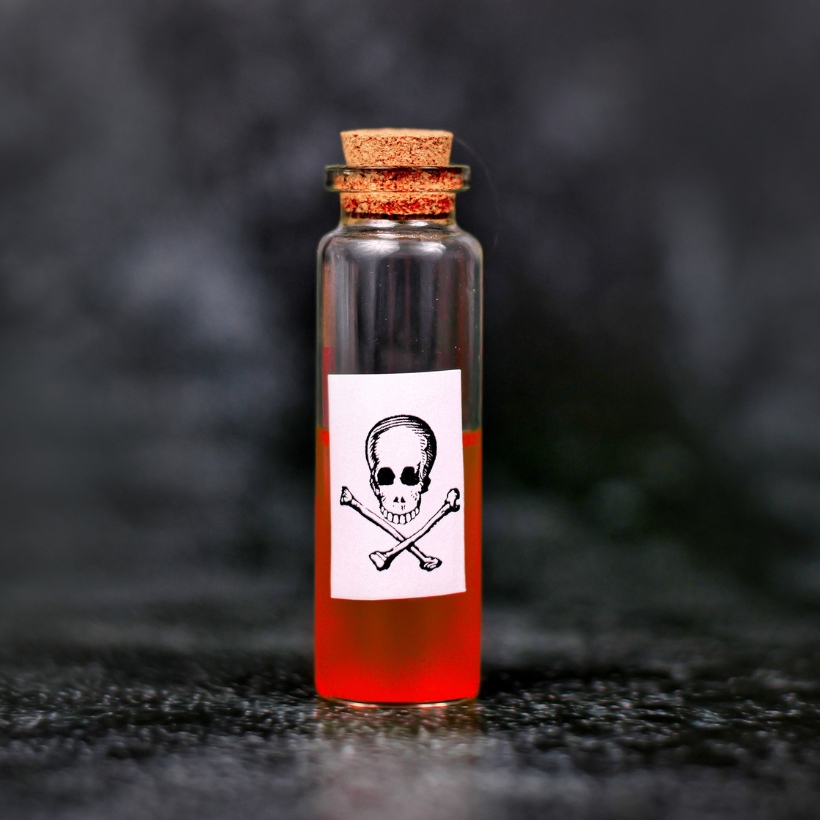
Putrescine. The word alone sounds ominous—and fittingly so. This foul-smelling compound is produced when amino acids break down in decaying tissue. It’s found in rotting meat, spoiled eggs, and yes—bodies approaching death.
But here’s where it gets strange: Even before clinical death occurs, the body may begin to emit trace amounts of this chemical. It’s not enough to make you recoil or faint, but it’s enough to register subconsciously, especially in those attuned to energy shifts or emotional undercurrents.
In a study led by Wisman, participants exposed to undetectable levels of putrescine showed increased vigilance, anxiety, and avoidance behavior. They didn’t know why. They just felt… uneasy. It’s as if the scent activated a deep evolutionary memory that shouted: “Something’s wrong. Run.”
This phenomenon is not exclusive to humans. Animals have long used scent to detect sickness, vulnerability, or death in their companions. Cats and dogs, in particular, have been observed behaving differently around humans shortly before they pass—licking, whining, or simply refusing to leave their side. Perhaps, they’re just more attuned to the scent of death than we are.
So while putrescine may be a simple chemical in a lab, in the sacred process of dying, it becomes a molecular messenger from the beyond.
Table: Biological vs Spiritual Interpretations of Death Scent
| Scientific Interpretation | Spiritual Understanding |
|---|---|
| Release of putrescine as cells break down | Soul beginning to detach from the physical body |
| Activation of fight-or-flight response | Intuitive recognition of a spiritual threshold |
| Unconscious reaction to the scent of decay | Energetic alert system preparing us for transition |
| Increase in anxiety or discomfort | Sensitivity to the thinning of the veil between worlds |
Phantom Scents and the Mystery of False Smells
Have you ever caught a whiff of perfume when no one’s there? Or the smell of smoke without any fire? These are known as phantom scents, or phantosmia, and they add another layer to the relationship between smell and spirituality.
Medically, phantosmia is sometimes associated with neurological issues or migraines. But spiritually? It’s considered a divine signal—a message from the unseen. Many claim that smelling roses can indicate the presence of angels. Others believe that the scent of a deceased loved one’s cologne is a sign they're near.
Now consider the phantom scent of decay. Some report smelling something “off” around someone who seems fine—only to find out that person passed soon after. Could this be a kind of energetic foreshadowing?
“Sometimes the dead speak not in words or dreams, but in scent.” – Unknown Hospice Nurse
It’s also possible that your soul senses what the mind cannot. You’re not hallucinating. You’re perceiving on a different plane.
While science scrambles to define these experiences, spirituality embraces them. And in that acceptance, we find peace with the unknown.
Smell as an Emotional Translator
Smell doesn’t just warn us of danger. It communicates emotion, according to recent studies. Yes, your body might actually emit different scents when you’re afraid, happy, or anxious—even if you’ve showered and put on deodorant.
This field of research taps into emotional pheromones—chemical signals we subconsciously pick up from others. A study from the Netherlands found that people exposed to sweat from anxious individuals became anxious themselves. The scent of fear, quite literally, is contagious.
If we can smell fear, can we also smell grief, relief, or even release?
The answer seems to be yes. Wisman’s findings suggest that death's scent isn't just about rot—it’s about emotion. As someone nears the end, their fear, acceptance, or peace might be encoded in their molecular output.
That could explain why some people feel serene in the presence of the dying—not all deaths smell of fear. Some smell of freedom.
Human Evolution: Why We React to the Smell of Death
From an evolutionary standpoint, reacting to the scent of decay was essential. In the wild, a rotting body meant disease, predators, and danger. Those who learned to avoid such smells survived longer.
This ancient instinct may still live within us, just beneath the surface. When we smell something “off,” our brain sounds the alarm—even if we’re at Grandma’s bedside and there’s no immediate threat.
It’s not that we fear death itself, but what it represents: the collapse of order, the unraveling of life, the beginning of something unknowable.
However, spiritual evolution invites us to reinterpret this reaction. Instead of running, we pause. We listen. We hold the hand of the dying, despite the scent. That’s growth.
So, while biology says flee, the soul whispers stay.
Table: What the Nose Knows – Emotional Scent Triggers
| Type of Scent | Potential Emotional or Spiritual Message |
|---|---|
| Sweet floral fragrance | Angelic presence or divine reassurance |
| Burning or smoke smell | Warning or energetic purge |
| Sour or decaying odor | Physical illness or spiritual release process |
| Familiar perfume/cologne | Deceased loved one making contact |
| No scent, but heaviness | Energetic transition in progress |
Can Animals Smell Death Too?
Absolutely. Dogs, cats, horses, and even birds have all been documented exhibiting odd behavior around dying individuals. Some pets refuse to leave the room. Others cry or pace. Some grow completely still.
In hospitals and hospices, therapy dogs are trained to sit with the terminally ill. But some uncertified pets have accurately predicted death—curling up beside the soon-to-be-deceased hours before they pass.
What are they smelling?
Likely, the same chemical markers—like putrescine—that we humans detect subconsciously. But because animals rely more heavily on scent, their detection system is stronger, purer.
In spiritual traditions, animals are often viewed as bridges between worlds. They see and smell what we cannot. And they teach us to pay closer attention to what’s beyond logic.
Does the Soul Leave a Scent?
It’s a question for the mystics—and the poets. If the body emits putrescine in death, does the soul release something too?
Many believe yes. Some report the scent of jasmine, roses, frankincense, or even vanilla moments after a loved one dies. Others speak of a sudden sweetness in the air.
These aromas aren’t about decomposition. They’re symbolic. The soul, ascending or transitioning, may leave a fragrant trace—a goodbye in the form of an invisible bouquet.
Science won’t prove this any time soon. But hearts already know it’s true.
FAQs
Q1: Is it true that everyone emits a scent before dying?
A: Most likely, yes—at least at a microscopic level. As the body prepares for transition, compounds like putrescine are released, even before clinical death occurs.
Q2: Can we train ourselves to detect this smell consciously?
A: It's unlikely to become fully conscious unless you have a heightened sense of smell or practice olfactory sensitivity training. The response is mostly subconscious, similar to instinct.
Q3: What should I do if I smell something unusual around someone ill?
A: Stay calm. Don’t panic. Use your intuition. The scent may simply be a subtle cue to prepare emotionally, not a call to action.
Q4: Can this scent linger after death?
A: Sometimes, yes. Both biological odors and energetic imprints can remain in a space, especially if not physically cleared or spiritually cleansed.
The Scent of Goodbye
In the end, death is not just an event—it’s a process. A quiet shifting of energies. A letting go. And thanks to the olfactory system, we’re tuned into that process more than we realize.
The nose doesn’t just sniff out food or danger—it whispers the secrets of existence. From the first breath to the final exhale, smell is our silent companion.
The next time you're near someone on the threshold, listen not just with your ears—but with your entire being. Because the body knows when death is coming.
And sometimes, it starts in your nose.


Having studied energetic healing, counselling, coaching, yoga, and Buddhism, Charles is a teacher of practices that support others to move forward and heal by holistic means.