
What really happens when we die? It’s a question that has haunted humanity since the dawn of time. Philosophers, mystics, and theologians have all tried to explain what lies beyond that mysterious veil. Yet today, science is starting to catch up with spirituality — and the findings are nothing short of mind-bending.
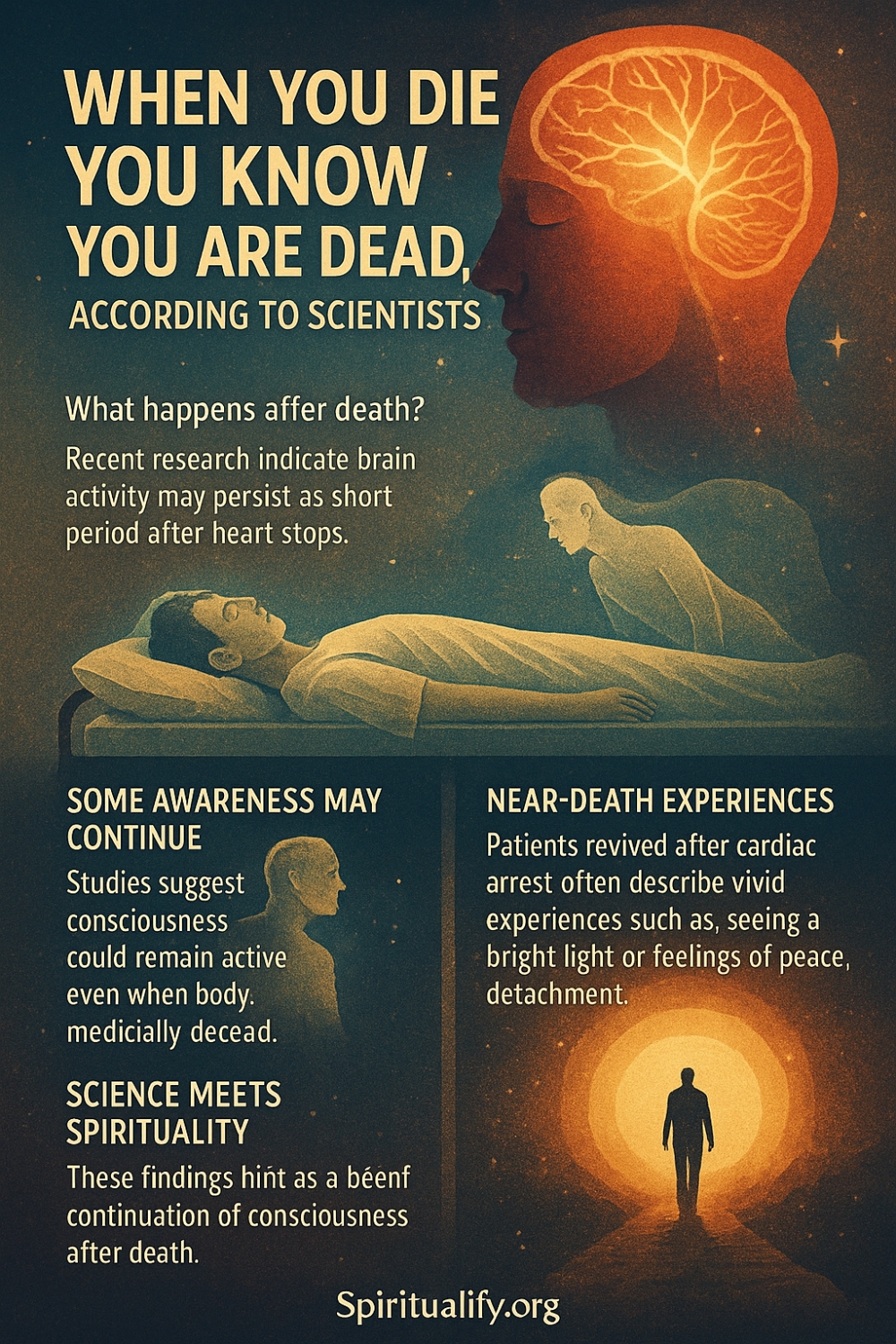
Recent research suggests that death may not be as immediate as we once believed. The human brain, in some cases, continues to function even after the heart stops. This means consciousness — the essence of who we are — might remain aware of our surroundings, even when our body has clinically died.
Imagine this: your heart stops, doctors pronounce you dead, yet your mind continues to witness everything — the conversations, the room, even your own lifeless body. Terrifying? Maybe. Profound? Absolutely.
Science is beginning to explore what spiritual traditions have long hinted at — that death might not be an end, but a transition. As new studies emerge, the line between life and afterlife grows ever thinner, inviting us to rethink what it truly means to “die.”
“Death is not extinguishing the light; it is only putting out the lamp because the dawn has come.” — Rabindranath Tagore
What Is Death, Really?

Death used to be considered a single, final moment — the instant the heart stops beating. But according to Dr. Sam Parnia, a renowned resuscitation researcher, death is more of a process than an event. He explains, “Technically speaking, that’s how you get the time of death — it’s all based on the moment when the heart stops.”
Once the heart ceases, blood no longer flows to the brain. Within seconds, brain activity slows, reflexes vanish, and the body enters biological silence. Yet, paradoxically, some level of awareness may continue.
Studies reveal that after cardiac arrest, the brain can remain active for several minutes. In animals, a burst of brain activity — more intense than during waking life — has been detected right after death. Humans, too, have described awareness during this period: seeing doctors working on them, hearing voices, or even feeling an unusual calm.
These moments challenge everything we know about consciousness. If the brain continues to function after death, could our awareness survive longer than our bodies? Science doesn’t yet have all the answers, but one thing is certain — death isn’t as immediate, or as final, as we once thought.
“We may be conscious for a few moments after our heart stops, even when medically, we’re gone.” — Dr. Sam Parnia
Cardiac Arrest vs. Heart Attack — The Difference
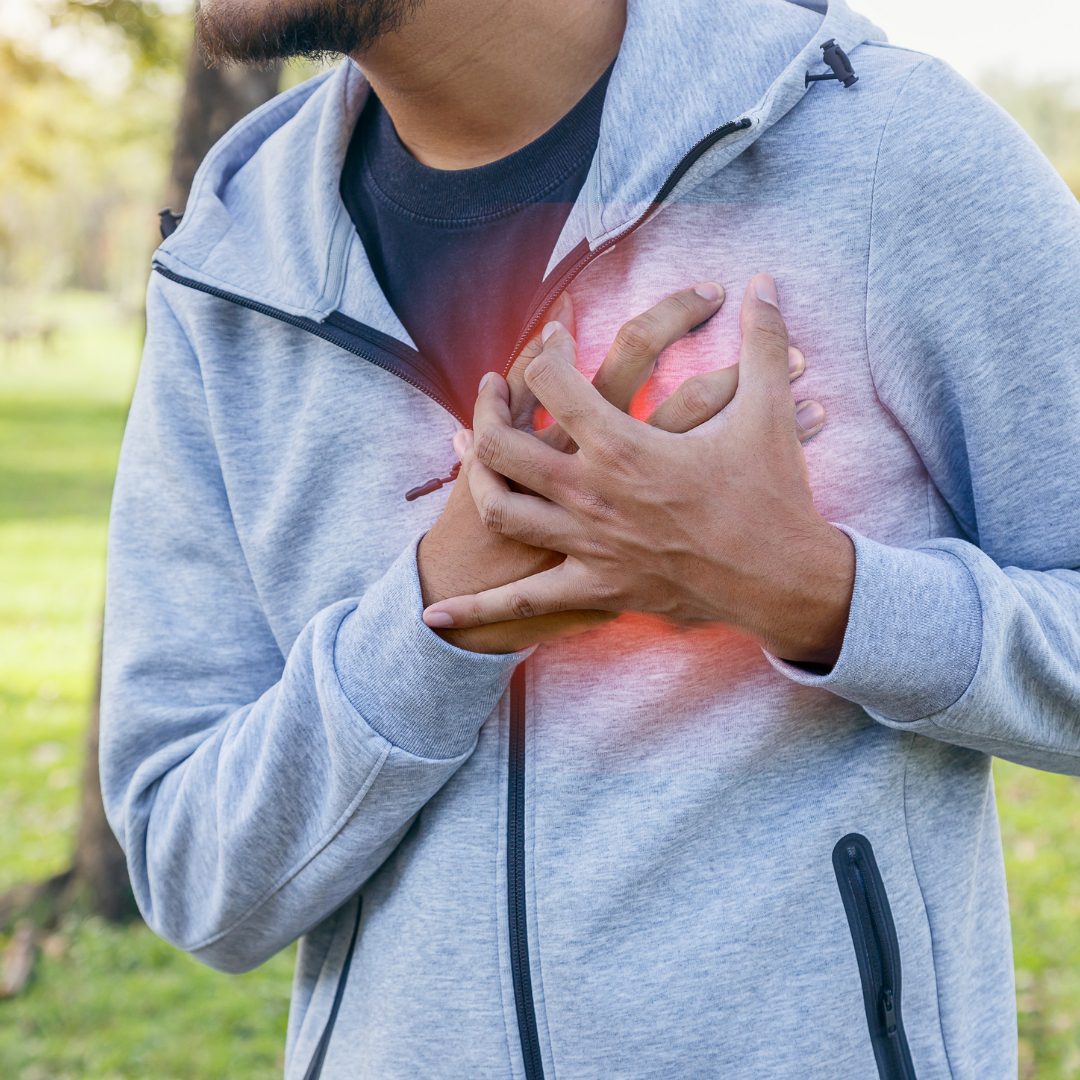
To understand how scientists study death, it’s crucial to distinguish cardiac arrest from a heart attack. Although the two are often used interchangeably, they describe very different phenomena.
-
A heart attack occurs when blood flow to part of the heart is blocked. The heart keeps beating, but part of its muscle begins to die.
-
A cardiac arrest, however, is when the heart stops completely. The electrical signals that control its rhythm suddenly fail, cutting off blood circulation to the brain and other vital organs.
During cardiac arrest, the body technically dies — but consciousness doesn’t always vanish right away. In fact, this is the stage where some of the most fascinating data has been recorded.
Researchers have observed patients describing vivid awareness during cardiac arrest, even when no heartbeat or measurable brain activity was detected. They recalled medical conversations, sensations, and lights — later confirmed by doctors and nurses as accurate.
Such findings suggest that the mind may remain active, even when the body does not. It’s as though consciousness steps outside of time for a few moments, observing the world it is about to leave behind.
The Science of Consciousness Beyond Death
Dr. Sam Parnia and his colleagues have launched large-scale studies across the United States and Europe to explore one of the most taboo questions in science: What happens to consciousness after death?
Their research focuses on patients who have experienced cardiac arrest and were later revived. By combining EEG brain scans, interviews, and physiological data, they are attempting to map the moment of dying with precision.
Participants often describe floating above their bodies, seeing bright lights, or re-experiencing key life moments — a phenomenon commonly known as near-death experience (NDE). Medical staff have verified some of these accounts, confirming details that patients couldn’t have known otherwise.
Parnia compares this to studying universal human emotions like love or fear: “We’re trying to understand the features that people experience when they go through death, because this may reflect a universal journey.”
The data implies that consciousness may continue for a few minutes after death, long enough for the dying person to observe what’s happening — a concept both chilling and deeply spiritual.
Brain Activity After Death: A Window Into the Beyond
One of the most astonishing discoveries came from a Canadian intensive care unit where doctors monitored patients as life support was withdrawn. Out of four individuals, one displayed brain activity for nearly ten minutes after death.
Ten minutes may not sound like much, but in neurological terms, it’s an eternity. During this period, doctors observed patterns in the brain resembling deep consciousness — not random static. The other patients showed no such activity, suggesting that death is a highly individual experience.
This observation fuels the theory that consciousness may persist briefly after the heart stops, much like a dim candle flickering before extinguishing.
“The human mind is the last frontier of science — and perhaps, the bridge between life and whatever comes next.”
What’s clear is that the moment of death isn’t universal. For some, awareness may fade instantly; for others, it may linger — watching, remembering, or even crossing thresholds science cannot yet measure.
| Time After Death | Possible Brain Activity |
|---|---|
| 0–10 seconds | Electrical surge detected |
| 10–30 seconds | Reflexes fade, oxygen drops |
| 1–3 minutes | Measurable neural firing continues |
| 3–10 minutes | Possible awareness in some cases |
| 10+ minutes | Irreversible cessation |
The Mystery of Consciousness: Science Meets Spirit
Despite all our technology, science cannot define consciousness. It can describe brain activity, but not the awareness that experiences it. This mystery lies at the intersection of biology and metaphysics — where physics meets philosophy, and where science and spirituality finally shake hands.
Some physicists propose that consciousness is not generated by the brain but received by it, like a radio picking up signals. When the body dies, the signal may simply continue elsewhere.
Others argue that consciousness is an emergent property of neurons and will cease with brain death. Yet the data — those minutes of post-mortem awareness — refuses to fit neatly into that view.
Perhaps, as ancient mystics claimed, death is merely the shifting of energy — consciousness releasing its physical form and returning to a universal field. If this subject fascinates you, consider subscribing to stay updated with more insights into the mysteries of the mind, life, and the afterlife.
FAQs
1. Do people really know they are dead?
According to studies, some individuals remain aware for a short time after death. Their brains may generate energy bursts, allowing them to perceive and process information even after their hearts stop. This awareness could last from seconds to minutes, but it fades as brain activity ceases completely.
2. Are near-death experiences proof of an afterlife?
Not necessarily proof, but compelling evidence. Near-death experiences share universal patterns — lights, peace, life review, and detachment from the body. Scientists see these as neurological phenomena, while spiritual traditions interpret them as glimpses beyond the veil. Both agree they are profoundly transformative.
3. How do scientists study consciousness after death?
Researchers monitor patients’ brainwaves and oxygen levels during cardiac arrest. Survivors are later interviewed about what they experienced. These studies reveal that some awareness persists even when the brain should be inactive, suggesting that consciousness may not depend solely on biological life.
4. Is death painful?
Most accounts from those revived after clinical death describe not pain, but peace. Chemicals released by the brain, including endorphins and DMT, may produce a euphoric, calming state. Many report feelings of detachment, acceptance, and unconditional love — not suffering.
Last Words
Death is no longer a mystery reserved for philosophers or mystics — it’s becoming a scientific frontier. The findings of researchers like Dr. Sam Parnia reveal that consciousness may persist even after our final heartbeat, challenging the idea that life ends in darkness.
If awareness continues beyond death, even for moments, it forces us to rethink what it means to live. Perhaps, we are not bodies with consciousness — but consciousness temporarily housed in bodies.
“To the well-organized mind, death is but the next great adventure.” — J.K. Rowling
Whatever lies beyond, it’s not nothingness. It’s a continuation — one that science is only beginning to glimpse.
Key Takeaways
-
Death is a gradual process, not a single moment.
-
The brain can remain active for up to 10 minutes after death.
-
Consciousness may persist briefly after the heart stops.
-
Near-death experiences often match scientific observations.
-
Science and spirituality are converging on one truth: death isn’t the end.


Having studied energetic healing, counselling, coaching, yoga, and Buddhism, Charles is a teacher of practices that support others to move forward and heal by holistic means.