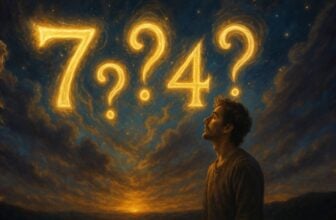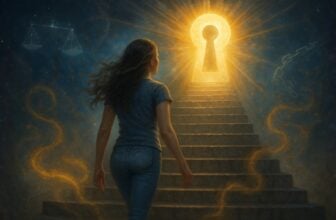

What happens when the lights go out? For millennia, every culture has staged this question in its own vocabulary—myths of ferrymen and fields of reeds, reincarnation cycles and pearly gates.
In the twenty-first century, a surprising contender joins the chorus: quantum theory—specifically, interpretations that suggest reality is not a single lane but a vast interchange of possible worlds.
Enter physician-scientist Robert Lanza, M.D., whose biocentrism argues that consciousness is not a latecomer in the universe’s story but the author of the plot. In this view, death is less a brick wall than a door, and behind it: more doors.
Lanza’s claim, distilled: consciousness doesn’t end; it transitions, potentially “moving” across an ensemble of universes where possibilities already bloom. The “me” feeling, he says, is energy dancing in neural circuitry—and energy is stubbornly conserved.
To many physicists and philosophers, that’s arresting; to others, it’s a bridge too far. But whether one cheers or jeers, the conversation is undeniably fertile.
Quantum mechanics has already taught us that the world is stranger than everyday experience suggests. If reality is a vast multiplex rather than a single screen, then what we call “death” might be a scene change—not the end credits.
Biocentrism, in Plain Language
Biocentrism proposes that life and consciousness are fundamental, not emergent side effects of matter. Instead of matter producing mind, mind—call it awareness, observerhood, subjective experience—co-creates what we measure as a physical universe.
Where conventional science says: “Atoms assemble into brains; brains generate consciousness,” biocentrism flips the arrow: consciousness conditions what atoms can be. It is a provocative inversion, but it makes a specific wager: puzzles in physics—space, time, causation—are easier to parse if we stop pretending they exist independently of observers.
In biocentrism, “death” is a mislabel for a transition in the relationship between awareness and a particular body-world pairing. When the mind-body “string” snaps, awareness is no longer constrained by the coordinates of one spacetime track.
The larger manifold—a mathematician’s term for the space of possibilities—remains open. If physics already entertains many-worlds (a legitimate interpretation of quantum theory), then the idea that experience could “route” into other branches is not logically impossible—controversial, yes; forbidden, no.
Critics counter that this conflates hard science (lab-tested quantum predictions) with interpretations (philosophical narratives added atop the math). That’s fair. But biocentrism doesn’t try to rewrite the equations; it tries to reinterpret what the equations are about.
To its supporters, the payoff is conceptual elegance: the observer isn’t an annoying footnote but the main character. To skeptics, it’s a category error dressed in cosmic clothing. Either way, the proposal compels attention because it asks what most models dodge: What is consciousness, and why does it fit reality so snugly?
Why Quantum Theory Enters the Conversation
Quantum mechanics unsettles everyday intuition. Particles exist in superpositions, outcomes are described by probability amplitudes, and measurement appears to “select” a result.
The many-worlds interpretation (MWI) takes this seriously: every quantum outcome that can occur does occur—in parallel branches of reality. From Schrödinger’s cat to everyday electrons, the math (the wavefunction) doesn’t collapse; it branches. In that picture, there isn’t one history of you—there are countless near-you’s evolving along divergent paths.
Biocentrism takes this branching landscape and asks a daring question: if subjective experience is primary, why assume it’s shackled to only one branch?
The claim isn’t that quantum mechanics proves afterlife in the ordinary religious sense, but that quantum theory permits a rational framework where awareness doesn’t “annihilate” so much as recontextualize.
Because the conservation of energy forbids energy from disappearing, and if the “me” feeling correlates to energetic processes, there’s conceptual space (if not yet lab evidence) for continuity that outlives a single biological configuration.
“Everything that can possibly happen occurs in some universe. Death doesn’t exist in these scenarios since all of them exist simultaneously.” —Robert Lanza
Where does this leave us? With a hypothesis that blends physics’ strangest lessons with one of philosophy’s oldest questions. It’s bracing, imperfect, and—if you enjoy ideas that make your brain stretch like cosmic taffy—irresistible.
Key Takeaways
-
Biocentrism posits that consciousness is fundamental and actively shapes the physical world we observe.
-
Many-worlds suggests reality branches, hosting all allowed outcomes—including versions of “you.”
-
In this framing, death is a shift in where and how consciousness experiences reality, not a vanishing act.
-
Evidence is interpretive, not decisive; physics’ equations stay the same, but their meaning is debated.
-
The ethical and spiritual implications—from how we live to how we grieve—are profound, even if proof remains beyond current instruments.
The Claim: Consciousness Moves Across Universes
Lanza’s central proposition is audacious yet crisp: consciousness doesn’t terminate; it “moves.” The verb is metaphorical—there’s no freight elevator ferrying souls. Instead, imagine conscious awareness as the point of view through which reality becomes intelligible.
While the body provides a local address (brain, senses, hormones), awareness itself is not identical with the address. When biological processes cease, the address is vacated, not the awareness that made the address meaningful.
In a many-worlds cosmos, an uncountable number of branches host compatible conditions for “you”—variants that diverged long before any final heartbeat. Biocentrism suggests that the stream of experience may continue along those viable branches. The “I” that tasted morning coffee and watched a storm roll in is not an object to be stored; it is a relation—a seamless act of witnessing. Relations can relink.
This is not a laboratory claim that a detector can confirm next Tuesday. It’s a philosophical-physical synthesis: quantum theory’s permission structure + a consciousness-first ontology.
Supporters regard it as a cleaner move than imagining awareness as created from absolute zero by molecules. Skeptics reply that continuity of personal identity is far from guaranteed by branching alone. If multiple copies exist, which is you? Biocentrism answers: experience itself is the identity, and where experience coheres, the “you” perspective persists. A tidy answer, if not a settled one.
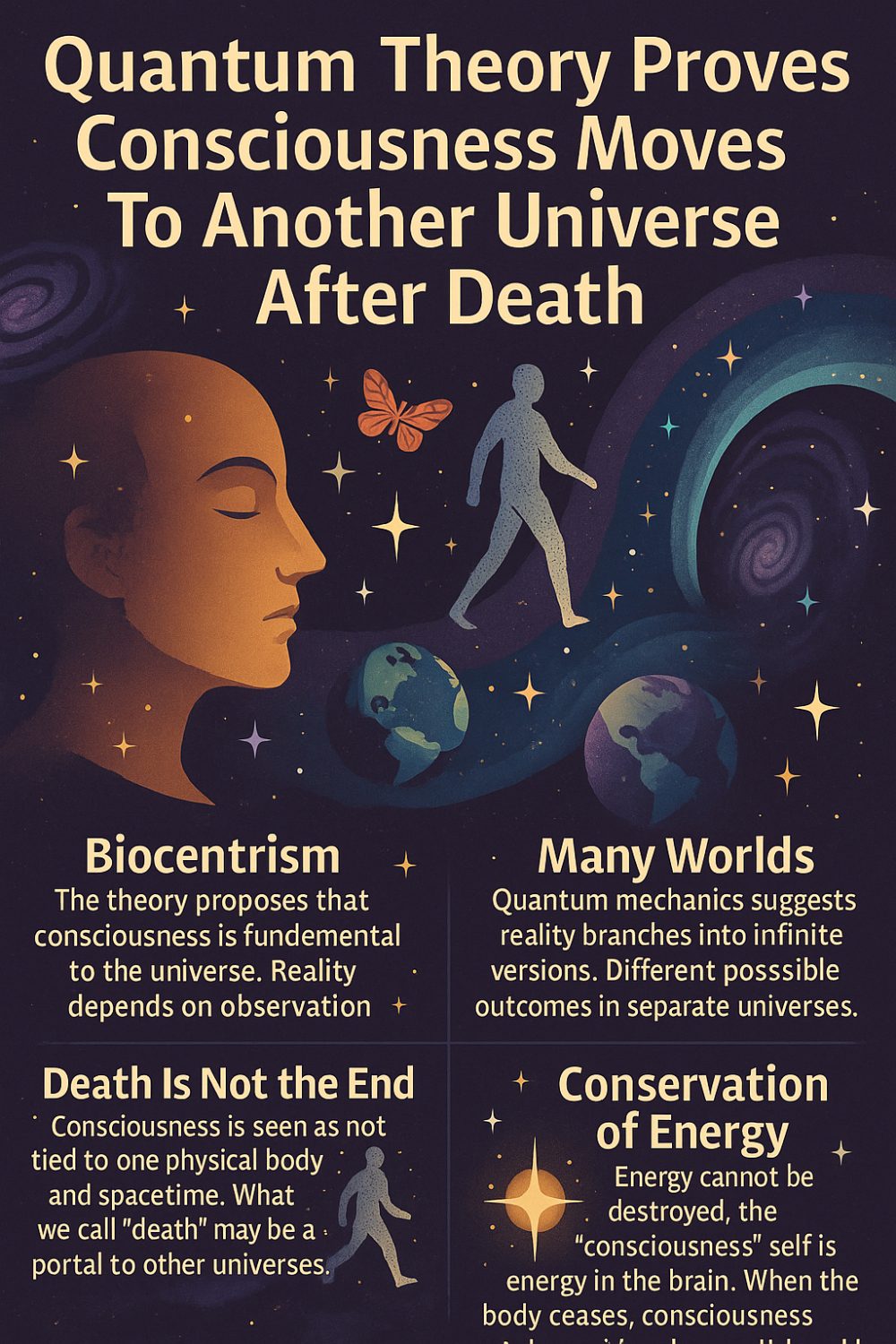
Many-Worlds 101: Infinite Timelines, No Single Ending
In MWI, the universal wavefunction never collapses; reality decoheres into non-communicating branches. Each branch contains a consistent history—its own “timeline.”
This interpretation aligns with quantum math and avoids the mystery of collapse, but it upscale-expands our ontology: infinitely many versions of events exist. The appeal is that it explains why quantum predictions work without adding ad hoc rules; the unease is that it asks us to accept a lavishly populated multiverse.
In a biocentric frame, many-worlds provides the landscape over which consciousness can, in principle, find continuity. If one branch ends for a body, awareness may “resolve” into a neighboring branch where conditions for experience persist.
Think less “teleportation” and more selection—like tuning a radio: many stations are already broadcasting; the dial determines what you hear. If one station fades, the spectrum remains.
“Indeed, biocentrism suggests it’s a manifold that leads to all physical possibilities.” —Robert Lanza
There’s poetry here, but there’s also a caution sign. Decoherence explains why branches don’t talk to each other; personal continuity across branches is not part of standard physics. That leap sits in the interpretive layer.
Yet, for a public wrestling with mortality, many-worlds shifts the question’s emotional color: perhaps endings are local, not global. A small comfort, maybe, but as comforts go, not the worst.
Consciousness as the Constructor of Reality
Most scientific narratives place consciousness at the end: stars forged elements, chemistry knitted molecules, biology assembled neurons, and neurons finally lit the lamp of awareness.
Biocentrism places awareness at the beginning: space and time are tools consciousness uses to organize experience. In this view, what we call “objective” is just intersubjective—stable patterns shared across observers.
How could consciousness “construct” reality without magical thinking? Consider that we never access the world except through measurements—perceptual or instrumental. Quantum theory tells us that measurement outcomes are not written on a cosmic clipboard; they’re probabilistic until registered.
The observer effect can be understood minimally (observers are physical systems that cause decoherence) or more radically (observers are indispensable to outcome reality). Biocentrism lives on the radical side.
A friendly reminder: reality doesn’t evaporate when we close our eyes. Even biocentrists agree that the world is remarkably stable, because the rules of experience are stable. The claim is not that “mind makes rocks soft,” but that what we call rock-ness is a dependable contract between experience and the manifold.
Critics argue this is word-alchemy; proponents say it resolves the mind-matter riddle without pretending the mind is a ghostly by-product. If you’ve ever looked at a sunset and felt the universe look back, this proposal offers a conceptual home for that hunch.
The “String Snaps”: Mind–Body Separation and Time
The transcript uses a vivid metaphor: the string binding mind and body can snap. When it does, two separations occur: from biological constraints and from the local weave of time and place.
Subjectively, that could feel like a discontinuity in one world and a re-appearance in the permissive geometry of another. In ordinary life, our sense of time is a conveyor belt; in quantum physics, time is a parameter in equations, not an arrow with feelings.
If awareness is not “generated” but channeled by the body, then death is the end of a channel, not the end of the broadcast. The program continues on other frequencies.
This picture harmonizes with spiritual traditions that speak of bardos, subtle bodies, or a field of mind. It also resonates with near-death narratives where time dilates and self suddenly feels less claustrophobic.
Skeptics rightly ask: How would we test this? Excellent question. Short of designing experiments that correlate neural shutdown with nonlocal information (a tall order), what we can do now is model.
If mind is primary, we’d expect certain phenomenological regularities: coherence under altered states, lawful patterns in contemplative disciplines, and perhaps anomalies in information processing at biological boundaries. That research frontier is young. But curiosity is a renewable resource, and this territory invites an expedition.
Energy Never Dies: Physics, Metaphor, and Meaning
“Energy cannot be destroyed”—a bedrock principle. Translating that into personal immortality is where debates begin. Lanza’s framing—the “me” feeling is energy operating in the brain; energy can’t be destroyed—is suggestive, not conclusive.
The first law of thermodynamics guarantees that the energy budget balances; it does not guarantee that a particular pattern of organization (your autobiographical self) survives unchanged.
Still, metaphors in science aren’t mere decorations; they guide hypothesis formation. If subjective awareness correlates with certain informational/energetic patterns, then the end of one biological instantiation doesn’t forbid reinstantiation in a cosmos teeming with lawful possibilities.
Many-worlds gives the arena; information theory gives a language for pattern persistence; biocentrism supplies the thesis that awareness is the thing that patterns are for.
Humility belongs here. Physics tracks quantities superbly; qualia—the felt texture of experience—are famously resistant to tape measures. Yet the line “energy never dies” can be more than a funeral-home bromide if it prompts a careful investigation into how order, information, and experience collaborate.
If that investigation also eases the fear of annihilation, call that a welcome side-effect. (Side-effects aren’t always bad. Coffee jitters, for instance, occasionally produce great poetry.)
Who Is Robert Lanza, and Why People Listen
Robert Lanza’s résumé is not that of a mystic in a robe. He earned his reputation in regenerative medicine, stem-cell science, and biotech leadership, serving as scientific director at Advanced Cell Technology.
Only later did he wade into physics, cosmology, and philosophy—bringing with him a habit of crossing silos. Biocentrism: How Life and Consciousness Are the Keys to Understanding the Nature of the Universe brought the thesis to a wide audience and a louder argument.
“The ‘me’ feeling is just energy operating in the brain. But energy never dies; it cannot be destroyed.” —Robert Lanza
Why does his voice carry? Because he speaks both dialects: laboratory success and metaphysical curiosity. That blend makes biocentrism unusual—and controversial.
Admirers celebrate his courage to connect dots others keep in separate drawers. Critics warn that good fences—between empirical result and metaphysical speculation—make good neighbors. Both can be right. Science needs disciplined imagination. It also needs guardrails.
Whether future experiments vindicate or retire biocentrism, the proposal has already done a service: it forces the question of consciousness back onto the main stage.
You can change the cast, but not the plot: until we understand what experience is and how it relates to physical description, our cosmology has a missing chapter. Lanza’s book (and the debate it provokes) aims squarely at that blank page.
A Practical Interlude: Living with Cosmic Possibility
Grand ideas are only as valuable as the lives they improve. If biocentrism (or even just its maybe) resonates, certain practices acquire new shine. Attention becomes sacred—what you notice, you co-create.
Ethics becomes urgent—if experience is primary, then the quality of experience (yours and others’) matters profoundly. Courage becomes reasonable—if endings are local, risk becomes lighter, kindness heavier. The story we tell ourselves about death loops back to how we behave while alive.
This is also a good moment to connect: if contemplative science, cosmology, and the mystery of consciousness light you up, subscribe to stay in the circle—new essays, practice notes, and interviews land regularly. Community doesn’t eliminate uncertainty, but it makes wonder a shared resource.
None of this requires belief in multiverses as literal neighborhoods. Even as metaphor, the idea that awareness is central can turn a gray Tuesday into a vivid apprenticeship: listen more closely, love more audaciously, and build the kind of meaning that survives every measured heartbeat. The cosmos might be bigger than we imagined. Our responsibility inside it is, too.
Last Words
Whether or not one embraces biocentrism, the proposition that consciousness is central and that death may be a transition reframes an ancient fear into a fresh inquiry.
Quantum theory’s strangest lessons—superposition, branching, observer-dependence—don’t deliver an afterlife certificate, but they do legitimize imagination at the frontier of what counts as real. Lanza’s thesis stands in that charged air: part science, part metaphysics, wholly audacious.
Perhaps that’s the right mixture for an era where our instruments reach galaxies while our hearts seek meaning. If the universe is a manifold of possibilities, then living well is choosing boldly which possibilities to make vivid—kindness, wonder, courage—and letting that choice echo, in this world and whatever worlds follow.
And if the lights never truly go out, then tonight’s task is simple: pay attention—the cosmos is listening back.


Having studied energetic healing, counselling, coaching, yoga, and Buddhism, Charles is a teacher of practices that support others to move forward and heal by holistic means.